Best Water Parks for Teenagers in 2026
The water parks that work for teenagers aren't the ones that work for toddlers, and they're not always the ones that work for adults either.
Teens want autonomy. They want slides that scare their parents. They want enough space to wander off with their friends without supervision and come back four hours later sunburned and happy. And they want the park to take them seriously, not corral them into a "tween zone" with floaties shaped like cartoon turtles.
When I worked at Oceans of Fun in Kansas City as a teenager, I watched two distinct kinds of teen visits play out. The kids who came with families that had picked the right park had the time of their lives. The ones whose parents had picked a kiddie-focused park were on their phones by lunch.
:::quote
The single biggest mistake parents make is picking a "family-friendly" park assuming it'll work for everyone. A 14-year-old at Sesame Place is a 14-year-old who'd rather be home.
:::
This guide is for the families with kids 11 and up who want a park that actually delivers for that age range.
Top picks by what your teen wants
| What they want | Best pick | Why |
|---|---|---|
| Pure thrill — biggest, fastest, scariest slides | Schlitterbahn New Braunfels | Still the slide-coaster capital. Master Blaster ride duration unmatched. |
| Social hangout vibes | Volcano Bay (Orlando) | Designed like a beach resort; teens disappear for hours without parents worrying |
| Variety + record-setters | Splashin' Safari (Holiday World) | Three of the world's longest water coasters in one park, free sunscreen and Wi-Fi |
| Indoor + late hours | Kalahari Resort (Sandusky/Poconos) | Largest indoor parks in the U.S., open until 10pm most nights |
| Adults-on-the-outside, teens-on-the-inside | Noah's Ark (Wisconsin Dells) | Biggest outdoor park in America, plus the Dells nightlife scene afterward |
What makes a water park work for teens
Five things I look for, in order of importance:
| Feature | Why teens care |
|---|---|
| Real thrill rides — bowl slides, water coasters, drop slides | The whole point. A park without these is a glorified pool. |
| Wave pools and lazy rivers as social spaces | Where teens hang out between slides. The vibe of these areas matters. |
| Multiple "big" rides so wait times don't ruin the day | One signature slide isn't enough; teens will line up four times then leave. |
| Reasonable food and locker pricing for teen budgets | A 14-year-old buying their own lunch needs the park to not gouge them. |
| No height-requirement traps in marquee rides | Most teens clear 48 inches, but check before booking. A 5'2" 13-year-old can still be turned away from rides at some parks. |
:::warning
Read the height requirements page on a park's official site before you book — even at "thrill" parks, some signature rides have unexpected requirements (Verrückt at Schlitterbahn KC famously required adults too). A teen who travels four hours and can't ride the headline attraction is going to remember that trip for the wrong reason.
:::
The best water parks for teenagers in America
Schlitterbahn New Braunfels
Schlitterbahn New Braunfels has been the slide-coaster pioneer for decades, and it still earns its reputation.
The Master Blaster, originally the world's first uphill water coaster, is a multi-minute ride that snakes through the entire park. Banzai Pipeline drops you down a near-vertical wall. The Boogie Bahn surf simulator is the park's social hub — teens watch each other wipe out for hours.
What makes it different from a Six Flags water park is the spring-fed Comal River that runs through it. You can float a tube down most of the park between rides, which means downtime feels active rather than dead. Teens with their friends can drift between sections and rotate through rides without ever standing in a sterile concrete plaza.
:::tip
Buy tickets online at least 48 hours ahead — gate pricing at Schlitterbahn New Braunfels is among the steepest in Texas. Online tiers regularly run 25–35% off.
:::
For more on the Texas water park scene, see our best water parks in Texas guide and the Schlitterbahn vs Typhoon Texas comparison.
Best ages: 11+. Younger kids can use the kiddie sections, but the park's reputation is built on attractions teens and adults love.
Universal's Volcano Bay (Orlando)
Universal's Volcano Bay is built to feel like a beach resort, not an amusement park, and that distinction matters when you have teenagers.
Krakatau, the 200-foot volcano at the center of the park, contains the marquee Krakatau Aqua Coaster — a four-person canoe-style coaster that goes up, down, sideways, and through the volcano itself. The volume of "wait, that was awesome" reactions from teenagers riding this for the first time is the metric that tells you the design works.
Beyond Krakatau, the park's "TapuTapu" wristband system replaces traditional lines with a virtual queue. Teens scan their wristband at the ride entrance, get a return time, and go float the lazy river or hang at the wave pool while they wait. For a 14-year-old, that means actively choosing what to do every 15 minutes instead of standing in a chlorine-scented line for an hour. It changes the whole pacing.
:::stat
Volcano Bay's TapuTapu system can shave 2–3 hours of standing-in-line time off a busy day. That's real time teens spend in the water instead of on their feet.
:::
The downside: it's expensive. A single-day adult ticket runs $80–110 depending on season. For Orlando trip planning beyond Volcano Bay, our Florida water parks guide covers all the options. See Universal's official Volcano Bay site for current pricing.
Best ages: 12+. Strong fit for the entire teen years.
Splashin' Safari at Holiday World (Indiana)
Splashin' Safari is the park most teenagers haven't heard of and most leave talking about for years.
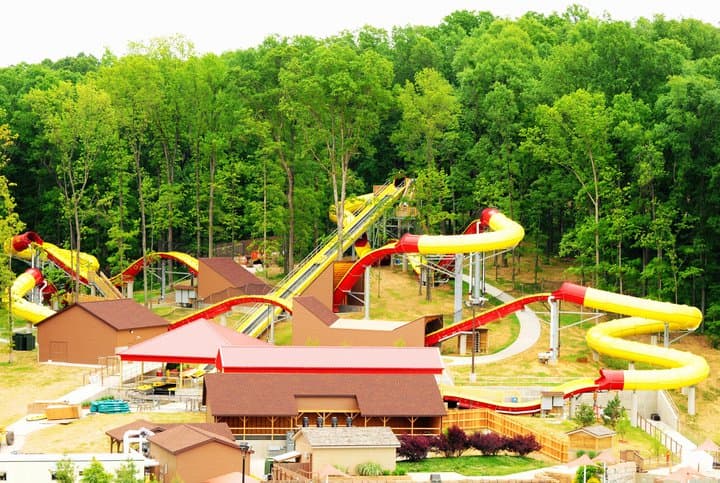
The park is the water-park half of Holiday World, a Christmas-and-Halloween-themed amusement park in southern Indiana. It's home to three of the longest water coasters in the world: Wildebeest, Mammoth, and Cheetah Hunt. Wildebeest alone is over a thousand feet long. The water coaster trio is the entire reason teens come back.
What makes the experience disproportionately good for teen budgets: the park gives away free sunscreen, free Wi-Fi, and free unlimited soft drinks throughout the property. A teen's lunch budget goes a lot further when drinks aren't $7 each.
:::tip
Holiday World runs combination tickets that include both the Halloween-themed amusement park (HoliWorld) and the water park for one price. With a teen, the combo is almost always the better value because you can split the day across both.
:::
The park sits in rural Indiana, which means it's a road trip from anywhere except Louisville and Evansville — but that's part of the appeal for the multi-day-trip families.
Best ages: 11+. Younger kids can ride most water coasters with a parent, but the park's headlines are designed for the teen-and-up crowd.
Noah's Ark (Wisconsin Dells)
Noah's Ark is the largest outdoor water park in America, and the scale is the point.
For a teenager, "biggest in America" translates to a full day where you don't run out of new things to try. The park has more than 50 attractions, including the Black Anaconda water coaster, the Scorpion's Tail near-vertical drop slide, and a handful of bowl slides that genuinely scare adults.
The wave pool here is one of the largest in the country and functions as a social hangout for teens between rides. The lazy river is a similar vibe — teens drift in groups while parents claim a chair.
Beyond Noah's Ark itself, the broader Wisconsin Dells area has a teen-tourism economy: an entrance to the Original Wisconsin Ducks tour, mini-golf courses, go-kart tracks, and a downtown strip that gives teens a non-water-park afternoon if they need a break.
Best ages: 11+. The marquee rides require 48-inch height (achievable for most teens but check first).
Kalahari Resort (Sandusky / Poconos / Round Rock)
Kalahari Resort is what indoor water parks look like when they decide to compete with outdoor parks on attraction count.
The Sandusky, Ohio location is the largest indoor water park in America, and the Pocono Mountains location runs a close second. Both have raft coasters (FlowRiders), bowl slides, half-pipe slides, and a dedicated thrill section that teens specifically gravitate toward.
The advantage of indoor for teens: late hours. Most outdoor parks close at 7pm. Kalahari runs until 10pm most nights, and overnight resort guests get the park first thing in the morning before day-pass holders arrive. A family of four staying one night gets effectively two days of water park access.
:::quote
The first time I took my 13-year-old to Kalahari Sandusky, he disappeared for four hours with two cousins. Came back at 9pm, sunburn-free in February, having had what he later called the best day of the year.
:::
For a deeper comparison of the indoor resort options, see our Great Wolf Lodge vs Kalahari guide and our indoor water park resorts roundup.
Best ages: 11+. The thrill section is built for this age and up.
Mt. Olympus (Wisconsin Dells)
Mt. Olympus earns a teen-specific recommendation for one reason: it's a hybrid water-park-and-amusement-park where the amusement park half is also legitimately good.
You get the water park (Greek-themed slides, wave pools, lazy rivers) plus go-karts, roller coasters, and a Trojan Horse-themed indoor structure that's part hotel and part attraction. For a teen who'd be bored at a pure water park after one day, Mt. Olympus solves the problem with on-site variety.
The pricing is also more teen-budget-friendly than most. Mt. Olympus is famous in the Dells for its all-inclusive pricing — when you book a hotel package, water park access is included, and so are the dry attractions. A four-night Dells stay can land under $1,500 for a family of four during shoulder season.
Best ages: 11+ for the water park; the go-kart and coaster sections work for the entire teen range.
Six Flags Hurricane Harbor (multiple locations)
Six Flags Hurricane Harbor parks are the volume-discount option. There are nine of these across the country, most located adjacent to a Six Flags amusement park, and the season-pass economics matter.
A Six Flags Gold Pass typically costs $80–120 and covers BOTH the amusement park and Hurricane Harbor at all locations. For a family with multiple teens that visits a few weekends a summer, the season pass is the cheapest path. Teens can return on their own once they're old enough to drive themselves.
The slides are solid if not record-setting. Each location has different headline attractions — the Arlington, Texas park has Hook's Lagoon for the youngest kids and Tornado for serious thrill seekers. The Jackson, NJ location has Big Wave Racer and the Bahama Mama river. The variety means a regional park reliably delivers a teen-appropriate day without travel.
Best ages: 11+. Season pass economics make this the right pick for repeat visitors.
Planning tips for water park visits with teenagers
Give them autonomy
:::tip{title="The check-in cadence rule"}
Set a meeting spot and a check-in time (every 90 minutes is the sweet spot — long enough that they don't feel babysat, short enough that you'd notice if something went wrong). Most teens will treat this as the price of independence and respect the rule.
:::
The single biggest difference between a teen who loves a water park visit and one who's miserable is whether they got to roam without parental oversight. Pick parks with enough scale that teens can disappear into a wave pool with friends and reappear in an hour, and you'll get a different version of your kid back at the end of the day.
Plan for the budget conversation upfront
Lockers, food, drinks, gift shop, locker re-entries — water parks nickel-and-dime in ways that are unfamiliar to teens who've grown up shopping with a phone wallet. Give your teen a per-day cash or prepaid-card amount before the trip and let them manage their own spending. The friction of "do I want to spend $14 on this Slurpee?" creates a faster lesson than parents arguing at the food kiosk.
What to pack for teens specifically
- Phone-pouch lanyard or waterproof case. Park lockers cost $12–25 per day, and teens are likely to want their phone with them.
- Reef-safe sunscreen — and the kind that doesn't smell like a daycare. Our reef-safe sunscreen guide has the picks teens will actually use.
- A change of clothes that aren't gym shorts. Teens often want to walk around the resort or grab dinner without a swimsuit on; a basic sundress or quick-dry shorts and shirt go a long way.
- Water shoes or quick-dry sandals. Pavement gets blistering and sliding-down-stairs accidents are higher with bare feet.
- A small carabiner. Sounds dorky; teens will silently appreciate having a way to keep their wristband or locker key clipped to a swimsuit.
When to consider a season pass
If you're within 90 minutes of a Six Flags Hurricane Harbor, a Hersheypark, or a regional park with a water park section, the season-pass math almost always wins for a family with multiple teens. Two or three visits in a summer break-even, and once teens can drive, they can use the pass without you. Our season pass guide breaks down the major chains.
What about smaller regional parks?
A solid regional park is often a better teen experience than driving to a destination park every summer. The best Florida adult water parks guide covers some that work well for the teen-through-adult range. For Midwest families, our best Midwest water parks lineup has options that don't require a flight.
The honest truth from running this site for 14+ years: the parks that get teens excited are the parks where the marketing isn't trying. A park that calls itself "fun for the whole family" usually isn't. A park that calls itself "the largest outdoor water park in America" or "home to three of the longest water coasters in the world" is making promises that teens find credible — and those parks usually deliver on them.
Plan accordingly, and this might be the year your kid actually puts the phone down.
Frequently Asked Questions
What is the best water park for teenagers?+
Schlitterbahn New Braunfels for thrill-ride seekers, Volcano Bay (Universal Orlando) for the social vibe and TapuTapu virtual queue, Splashin' Safari at Holiday World for the world's longest water coasters. All three deliver the combination of real attractions + room to roam that teens want.
At what age can teens go to water parks alone?+
Most major U.S. water parks set the supervised-minor age cutoff at 14 — anyone 14 and older can typically enter without an adult chaperone. Drop-off and pickup logistics matter; many parks won't let unaccompanied minors leave the property without a parent or guardian. Confirm with the specific park.
Are water park season passes worth it for teens?+
Yes if you live within an hour of a Six Flags or regional chain. A $80-120 Six Flags Gold Pass covers the entire summer and once teens can drive themselves it pays for itself in 2-3 visits. See our [season pass guide](/blog/water-park-season-pass-guide).
What should teens pack for a water park?+
A waterproof phone case or pouch (lockers cost $12-25/day), reef-safe sunscreen, water shoes or quick-dry sandals, a change of clothes for the drive home, and a small carabiner to clip the locker key or wristband to a swimsuit.
Are water parks safe for teens?+
Yes — modern water parks are engineered to industry standards with mandatory inspections. Risk increases when riders ignore weight limits, double up beyond capacity, or attempt unauthorized riding positions. The biggest real risk is heat exhaustion / dehydration on hot days; bring water and take breaks.
Brian Williams
Brian has been passionate about water parks since childhood and worked at one as a teenager. He founded Water Parks World to help families find the best water park experiences across America.