12 Unwritten Rules of Water Park Etiquette (From a Former Lifeguard)
I've been to hundreds of water parks across this country. I've stood on the employee side of the rope at Oceans of Fun, I've ridden the same slide three times in one morning at Schlitterbahn, and I've watched people behave in ways that made me genuinely question humanity. Most of the chaos you experience at a water park on a busy Saturday isn't bad luck — it's a small group of people who never learned how to share public space.
These rules aren't posted anywhere. Parks won't enforce most of them. But regulars know them, and once you know them, you'll spot a first-timer from fifty feet away.
Rule 2: Don't Hoard Tubes at the Bottom of a Ride
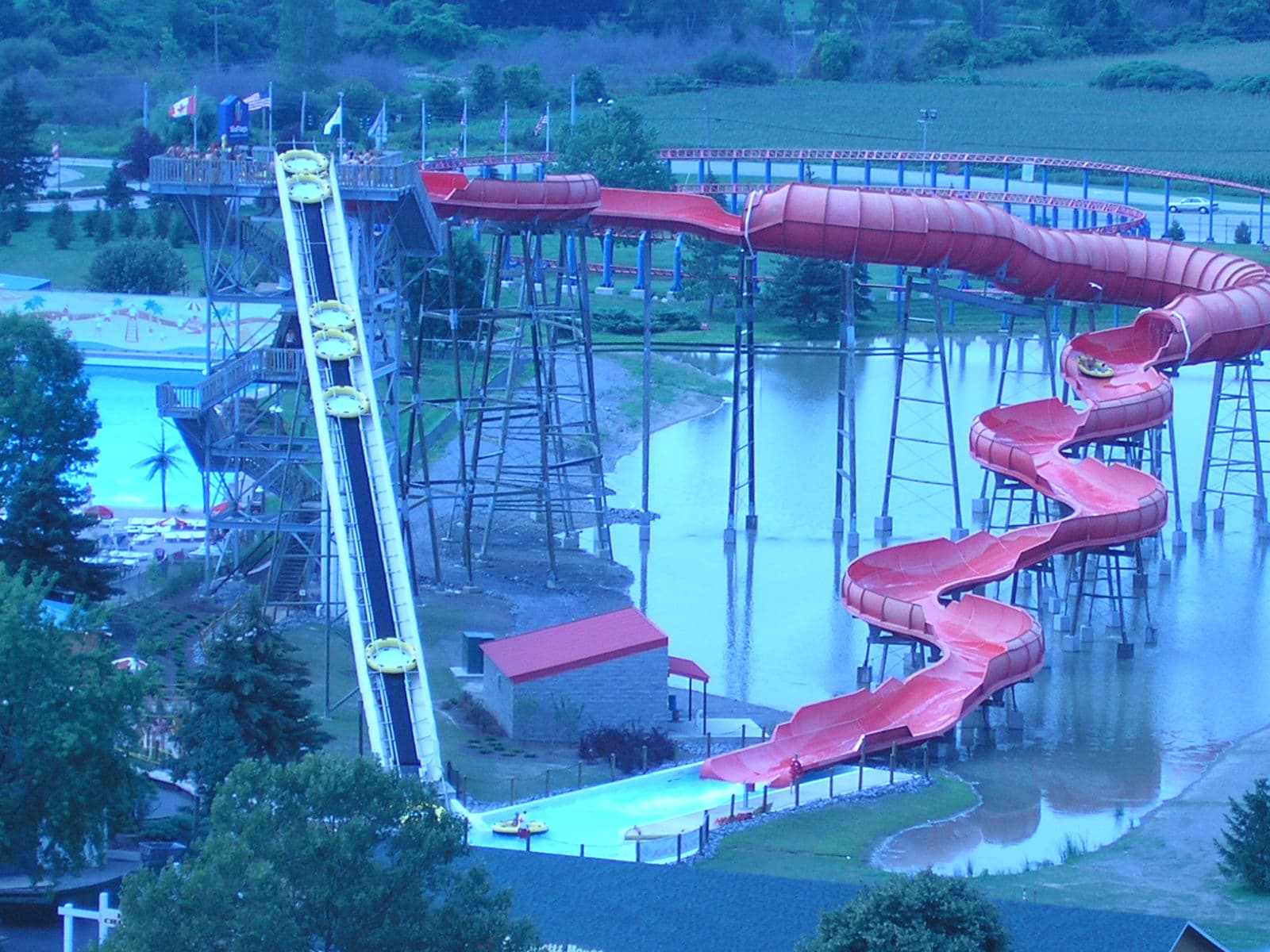
At almost every park I've visited — from Noah's Ark in Wisconsin Dells to Six Flags Hurricane Harbor in Dallas — there's a catchpool at the bottom of tube rides where people exit and leave their tubes. The rule is simple: take one tube up, return one tube when you get off.
Don't stack two or three tubes and drag them back toward the stairs so your group has guaranteed equipment when they reach the bottom of the queue. Attendants are supposed to catch this, but they're often managing five things at once. When I worked at Oceans of Fun, tube redistribution was a constant battle on busy days. The system works when people participate in it honestly.
Rule 3: Claiming Chairs Before You're Ready to Use Them Is a Real Problem
I want to be careful here because I know this is a slightly controversial take. Saving chairs while one or two people grab food? Totally reasonable. Throwing towels on eight chairs at 10:05 a.m. and then not returning until noon is just theft of shared resources.
Most parks actually have policies against this — Disney's water parks will remove belongings after a set time — but enforcement is spotty. The etiquette rule is: claim chairs for your group when your group is actually present, not speculatively for people who haven't arrived yet. If you want to guarantee seating, book a cabana — they exist for exactly this reason, and many parks charge less for them than you'd expect.
Rule 4: Watch Your Kids. This Is Not Optional.
I'm going to be blunt here. Every serious incident I've seen at a water park involved an unsupervised child. Not because kids are reckless — they're just kids — but because a parent was 200 feet away in a lounger scrolling their phone.
Children under 48 inches should be within arm's reach of an adult in any water environment. The American Red Cross recommends designating a "water watcher" in your group — one adult whose only job is active supervision, not conversation, not phones, not reading. I've seen a lifeguard clear a wave pool in under 60 seconds because a toddler went under. The lifeguard did their job. But don't put that burden entirely on a 19-year-old on their feet for eight hours.
Rule 5: The Queue Is a Line, Not a Suggestion
Cutting in line is the most universally hated behavior at any water park, and yet it happens constantly in the lazy river boarding areas and at family raft rides. The specific version that drives regulars crazy is the "I'm just joining my friends" move — where one person waits in line and then four others materialize from nowhere right before boarding.
If your group got separated, the polite thing is for the people who missed the queue to wait at the end while the one person who waited goes on the ride. I know that stinks. It's still the right call.
Rule 6: Keep Your Footwear On Until the Water Starts
Water park decks are treated with antimicrobial coatings, but they're still high-traffic surfaces. The American Lifeguard Association consistently cites foot and skin conditions as among the most common non-injury health concerns at aquatic facilities. Water shoes or flip-flops from parking lot to first slide entry — that's the standard. If you're not sure what to pack, my water park packing guide has specific shoe recommendations for different surfaces.
Rule 7: Don't Stand at the Top of a Slide Entrance Having a Full Conversation
The person behind you has been standing in that queue for 20 minutes. The slide is ready. Get on. I genuinely understand that some people are nervous at the top — that's real and valid. But if you're debating whether you want to do it, having that conversation at the front of the line (while six people wait behind you) is the wrong place to work through it. Step aside, let others go, then reassess.
Rule 8: Rinse Off Before Getting in the Pool
Every park has those shower stations between the changing area and the pools. Most people walk right past them. Those aren't decorative. The CDC's guidelines on recreational water illness are clear: rinsing off removes sunscreen, body oils, sweat, and other contaminants that react with chlorine to form chloramines — the stuff that actually makes your eyes burn and gives pools that harsh chemical smell. The "chlorine smell" people associate with pools isn't chlorine. It's chlorine doing its job on things that shouldn't be in the water.
A 30-second rinse before you enter the pool is one of those things that takes nothing from you and gives something back to everyone.
Rule 9: Don't Block the Stairs in the Pool
Zero-entry pools and activity pools have stairs that double as social gathering spots. I get it — they're comfortable, you can let small kids splash while you sit on the step. But if the stairs are the only way in or out of that section, you need to leave a lane open for people to pass. I've seen stairways effectively blocked for ten minutes while a group of adults sat chatting, oblivious to the traffic jam they'd created.
Rule 10: The Locker Room and Locker Banks Are Not Your Personal Storage Unit
You don't need two adjacent lockers for one family. You don't need to leave your locker rented all day on a peak Saturday if you've finished using it — most parks sell day lockers and hourly lockers for exactly this reason. When peak crowds hit, every locker matters. Use what you need, return it when you're done, and don't leave your stuff sprawled across the bench for twenty minutes while you go on one more ride.
Rule 11: Understand the Height Requirements Before You're in Line
Nothing is more uncomfortable than watching a child get turned away at the top of a ride after waiting 40 minutes with their parents — both because that kid is devastated and because it holds up the line while everyone processes the situation. Check height requirements before you get in line. Better yet, check them before you leave home.
Most parks post their ride height charts online. If you're at the park already, most have a measurement station near the entrance where kids can get a wristband indicating which rides they qualify for. Visiting early in the day gives you more time to sort this out without the pressure of a crowd behind you.
Rule 12: Read the Ride Instructions — The Actual Posted Instructions
Every slide and ride has a sign. Most people don't read it. I watched someone go down a speed slide headfirst (face down) at a park in 2019 because they didn't read the sign that said feet first only, crossed arms over chest. An attendant caught it in time. The sign exists because people have been hurt doing the wrong thing on that exact ride.
Weight limits, rider position, whether tandem riding is allowed, whether glasses need to come off — these vary from ride to ride within the same park. The 45 seconds it takes to read the sign is the most important 45 seconds of your time on that ride.
What First-Timers Do vs. What Regulars Do
| Behavior | First-Timer | Regular |
|---|---|---|
| Chair claiming | Drops towels at 10 a.m., returns at noon | Grabs chairs when group is present |
| Tubes | Hoards extras at ride bottom | Takes one up, returns one after |
| Lazy river | Locks arms across the full width | Floats in pairs or single file |
| Arrival time | 11 a.m. on a Saturday | 9 a.m. on a weekday |
| Ride signs | Skims or skips | Actually reads them |
| Shower station | Walks past it | Uses it |
| Kids | Assumes someone else is watching | Designates a water watcher |
The Bottom Line
When I was working at Oceans of Fun as a teenager, the thing that stuck with me was how genuinely happy people were at water parks — families, teenagers who'd normally be too cool to show it, everyone. The parks that kept that energy were the ones where the crowd was cooperative, where people were looking out for each other a little. The bad experiences people have usually trace back to the same handful of behaviors — most of which are on this list.
None of these rules require sacrifice. They just require a moment of awareness that other people are sharing the space with you. You'll have a better day if you follow them. So will everyone else.
Before your next visit, run through the complete water park packing checklist so you're not improvising in the parking lot, and check the best times to visit to skip the worst of the crowds. Preparation handles the logistics — etiquette handles the rest.
Brian Williams
Brian has been passionate about water parks since childhood and worked at one as a teenager. He founded Water Parks World to help families find the best water park experiences across America.