Best Water Parks for Pregnant Moms (Safety + Comfort Picks)
Most water park content for pregnant moms falls into one of two categories: a blanket "check with your doctor" disclaimer that tells you nothing, or a list of parks that's clearly written by someone who's never set foot in one. Neither helps you plan an actual trip.
I've been visiting water parks for decades, starting with my teenage summers working at Oceans of Fun in Kansas City. I've watched thousands of families navigate these parks — including visibly pregnant women who were clearly trying to figure out what was actually safe versus what was just fun for everyone else. This post is what I wish existed back then. Real guidance, specific rides, actual heat data, and parks where a pregnant woman can have a genuinely good day in the water without spending the whole time on the sidelines.
What Actually Works: The Lazy River as Home Base
Here's the good news: lazy rivers are genuinely excellent for pregnant women, and the best parks have ones you can enjoy for hours. The water is typically cooler than the air temperature, you're horizontal and supported by a tube, and the current does all the work. No climbing, no impact, no stairs in many cases.
I've written a full breakdown of water parks with the best lazy rivers — and when I'm scouting specifically for pregnancy comfort, I'm looking at three things: entry points with ramp or zero-step access, total length (a longer river means more time in the water before you have to get out), and shade coverage along the route.
Here are parks where the lazy river setup genuinely works well for pregnant visitors:
Schlitterbahn New Braunfels, Texas
Schlitterbahn's original New Braunfels location runs on the Comal River, which keeps water temperatures naturally cool — typically in the low 70s°F even in peak summer. That's almost ideal. The Ramblin' River is over 1,000 feet long, there are multiple shaded entry and exit points, and the natural spring water means no concern about heated pools. The park also has more flat, water-level attractions than almost any park I've visited. The trade-off: the terrain is hilly in sections, so wear proper water shoes.Typhoon Lagoon, Walt Disney World, Florida
Disney parks do accessibility better than almost anyone, and Typhoon Lagoon's Castaway Creek lazy river — 2,100 feet of it — is as relaxing as it gets. Multiple entry and exit ramps, covered seating areas throughout, and Disney's guest services staff are trained to actually help rather than just point you in a direction. The park's extensive shaded seating areas and quality food options (so you can eat, rest, and rehydrate easily) matter more than most people realize. My one warning: Typhoon Lagoon's wave pool is among the most intense in the country. Pregnant or not, those waves are serious. Stay out.Kalahari Resorts (Wisconsin Dells, Sandusky, or Pocono Mountains)
Kalahari's indoor sections are genuinely useful here — climate-controlled environments mean you're not fighting ambient heat on top of pool exertion. The lazy rivers at Kalahari properties are long and well-shaded (or enclosed). You can rotate between indoor and outdoor sections as your comfort changes throughout the day. The indoor water temperature is regulated and typically comfortable. For pregnant visitors in their third trimester especially, having an indoor retreat option is a real practical advantage.Cowabunga Bay, Henderson, Nevada
This one surprises people, because "Nevada in summer" sounds like a heat disaster. But Cowabunga Bay has invested seriously in shade infrastructure, and their lazy river has extended covered sections. If you go early (park open through midday, then rotate to shaded areas or take a genuine break), the park's smaller scale actually works in your favor — less walking between attractions.Rides to Avoid (And Why, Specifically)
I'll be direct. If you're pregnant, avoid these categories of attraction:
Multi-person raft rides with high-speed banked turns: The lateral G-forces and sudden stops are a problem. At parks like Universal's Volcano Bay, the Krakatau Aqua Coaster falls in this category. At Six Flags Hurricane Harbor parks, most raft coasters do too.
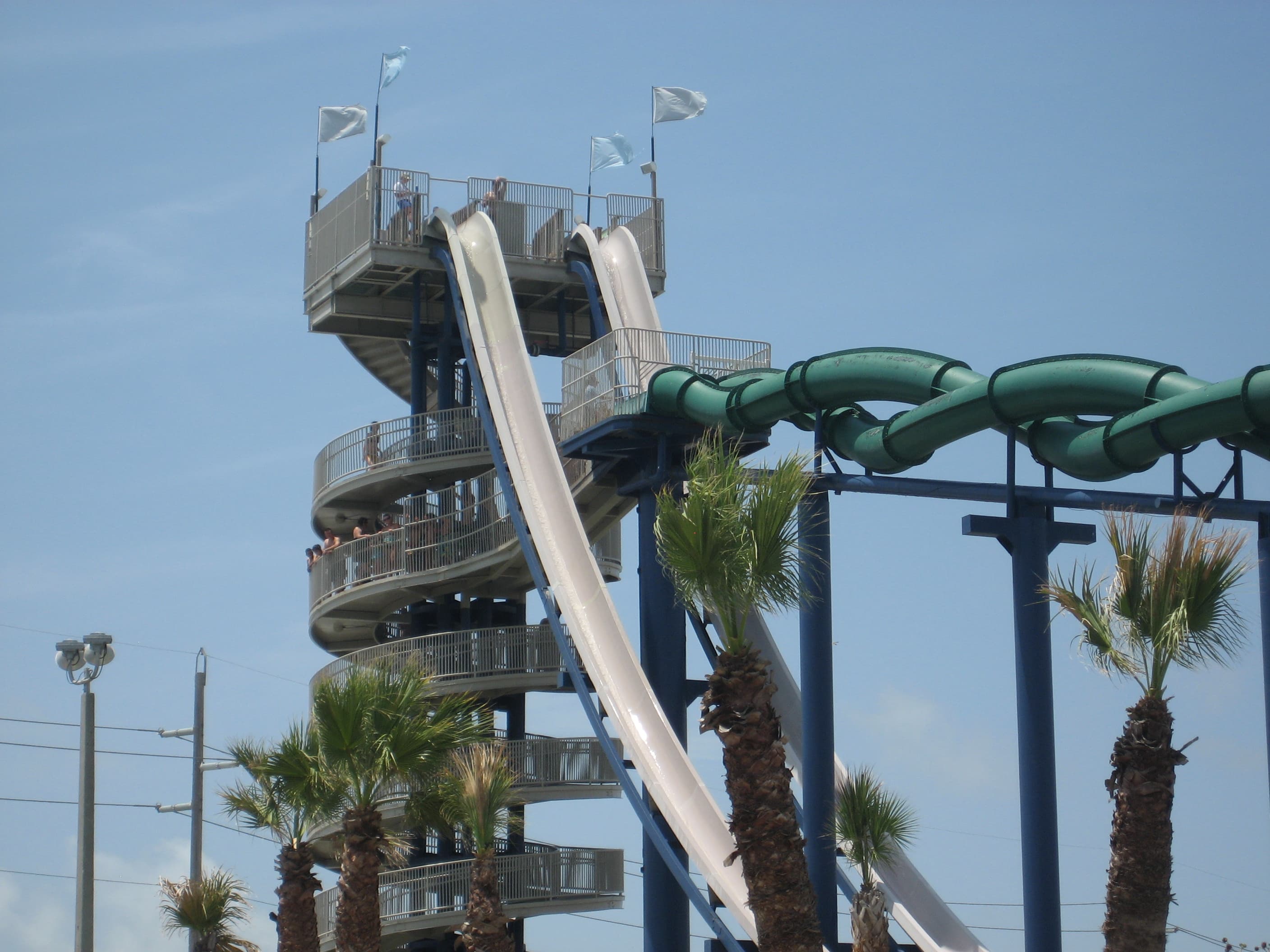
Body slides with enclosed sections and high exit speeds: These include ProSlide and WhiteWater West slides where your body is the contact surface. The impact on landing — even into water — is more significant than it looks from the outside.
Inline tube slides where you sit upright: Any slide that has you in a seated position with your back against the slide surface and requires you to brace your core on curves. Your center of gravity is different pregnant, and these slides generate unexpected lateral force.
Wave pools, full stop. Already mentioned above, but worth repeating.
Hydro-magnetic coasters: These are becoming more common at parks (Tornado at Kalahari, for example). They look gentle but involve propelled acceleration and banked curves. Not worth the risk.
A simple rule: If the ride requires you to hold a position, brace yourself, or has any posted restriction sign — including weight limits that might be affected by pregnancy — ask the attendant directly. Every park's ride restrictions are also posted at the ride entrance and often on their website under "ride requirements."
The Heat Problem Is Bigger Than the Rides
This is what most water park guides for pregnant visitors completely miss: the rides aren't usually the biggest hazard. The environment is.
A day at a typical outdoor water park involves:
- Walking on concrete that can reach 150°F on a hot day
- Standing in line — often 20-40 minutes — with no shade
- Repeated drying and re-wetting cycles that create a false impression of coolness
- Dehydration from sweating without noticing because you're constantly wet
The concrete temperature issue is serious and underreported. I've burned my feet walking barefoot at parks in July in the South. Wear water shoes — not optional when pregnant.
My practical protocol for a pregnant visitor on a hot day:
1. Arrive when the park opens. The first two hours are the coolest and least crowded.
2. Rehydrate before you feel thirsty. By the time you're thirsty, you're already behind.
3. Take a genuine 30-minute break in the shade or indoors every 90 minutes. Not a sit-down-at-the-side-of-the-pool break — an actual break in lower ambient temperature.
4. Know the signs that you need to stop: dizziness, headache, nausea, cessation of sweating, or any cramping. These are exit signals.
5. The Mayo Clinic recommends avoiding water above 100°F — that's hot tubs and heated pools, but also sun-warmed shallow water features.
Practical Comfort Picks by Trimester
First trimester: You're probably not showing much, but fatigue and nausea are real. Avoid anything that involves significant motion or jarring. Lazy rivers, zero-entry splash areas, and simple floating pools work well. Morning visits before heat peaks matter most.
Second trimester: Most women feel best here, and mobility is still reasonable. This is probably the best trimester for a water park day if you want to do it. Focus on the lazy river and calm float pools. Shade-heavy parks like Typhoon Lagoon or the Kalahari indoor parks are ideal.
Third trimester: This requires honest assessment. The combination of heat vulnerability, balance changes, and the effort required to navigate a busy park makes this difficult. If you go, keep it short (a few hours maximum), stay on zero-exertion attractions, and go with a companion who understands the plan.
What to Look For in Any Park You're Evaluating
Not every park is on this list, and you might have a local option worth checking. Here's what I'd verify before going:
- Zero-step or ramp lazy river access (look at the park map or call ahead — this is a real differentiator)
- Shade structures over at least part of the lazy river route and over seating areas (not just a few umbrellas)
- First aid station location and whether staff are trained in pregnancy-specific concerns
- Written ride restriction policy for pregnant riders (most major parks post this; if they don't, that's a red flag)
- Cool, clean water temperature — most park pools run 78-84°F, which is generally fine
Quick Facts
| Factor | What to Look For |
|---|---|
| Water temp | 78–84°F is generally safe; avoid anything above 100°F |
| Lazy river | Long, shaded, ramp entry, calm current |
| Best parks | Schlitterbahn NB, Typhoon Lagoon, Kalahari Resorts |
| Avoid | Wave pools, raft coasters, body slides, hot tubs |
| Best trimester for visiting | Second trimester, morning hours |
| Heat rule | Break every 90 min; hydrate before thirst |
| Must-bring | Water shoes, hat, high-SPF sunscreen, water bottle |
The Bottom Line
The lazy river is your best friend at a water park when you're pregnant — not a consolation prize. The best ones, like Schlitterbahn's Ramblin' River or Typhoon Lagoon's Castaway Creek, are genuinely great ways to spend a few hours. The real planning work is about managing heat and knowing which attractions to walk past without a second thought.
Back when I worked at Oceans of Fun, I noticed something that's stayed with me: the people who seemed to have the best days weren't always the ones doing the most intense rides. Plenty of them were floating on lazy rivers, completely relaxed, genuinely content. That's achievable when you're pregnant. You just need to plan for it instead of figuring it out when you're already standing in the sun.
Talk to your OB before you go — that's not a throwaway disclaimer, it's because they know your specific situation. But armed with the information above, you'll have real questions to ask and a real plan to bring back to them.
Brian Williams
Brian has been passionate about water parks since childhood and worked at one as a teenager. He founded Water Parks World to help families find the best water park experiences across America.